
Why Deceleration Is Essential For Athletes - Cedar Park Athlete Training

Most athletes love practicing the part of a play that looks fast: the sprint, the cut, the jump, or the first step.
But every one of those actions eventually requires the athlete to slow down. If they cannot absorb force and control their position, their speed becomes harder to use.
For Cedar Park, Leander, and nearby families, deceleration training is one of the clearest ways to make speed work more complete—not simply more exhausting.
What Is Deceleration Training?
Deceleration is the skill of reducing speed under control. It shows up when an athlete stops after a sprint, lowers into a landing, plants before changing direction, or settles their body before the next play.
It is not the same as telling an athlete to “slow down.” Good training teaches them how to use the ankles, knees, hips, and trunk together so braking happens in a strong position.
Research on multidirectional sport describes rapid acceleration and deceleration as central to changes in speed and direction. A controlled deceleration training study also found improvements in change-of-direction speed and repeated-sprint ability after a dedicated training program.
Why Speed Without Braking Is Incomplete
An athlete may win the first three steps and still lose the play if they need several extra steps to stop. A cleaner brake gives them more time and space to redirect.
That matters in football, soccer, basketball, volleyball, baseball, softball, lacrosse, and nearly every field or court sport. The athlete rarely runs in one straight line at one speed.
Deceleration also gives coaches a better view of movement quality. The landing or stopping position often reveals balance, coordination, and strength limitations that are harder to see during an all-out sprint.
What Deceleration Looks Like in Cedar Park Athlete Training
For families comparing Cedar Park Athlete Training options, good deceleration work should look coached and progressive. The athlete first earns control at lower speeds, then applies that skill under more realistic pressure.
A session may include:
Athletic-stance holds and low-speed snap-downs
Landing drills that teach quiet, balanced contact
Short accelerations followed by controlled stops
Planned cuts with attention to foot placement and posture
Reactive drills only after the athlete owns the basic positions
The goal is not to make every stop look identical. It is to give the athlete enough options and control to solve the movement problem safely and efficiently.
Start With Small Distances and Clear Positions
Young athletes do not need a long runway or a complicated cone pattern to learn braking. A few yards of acceleration followed by a stable stop can provide plenty of information.
Coaches can then change one variable at a time: more approach speed, a sharper angle, a reaction cue, or a sport-specific task.
This keeps the athlete focused on the skill instead of simply surviving a drill.

Strength Supports Better Braking
Deceleration places high demands on the lower body. Strength training gives the athlete more capacity to handle those demands, especially through the hips, thighs, calves, and trunk.
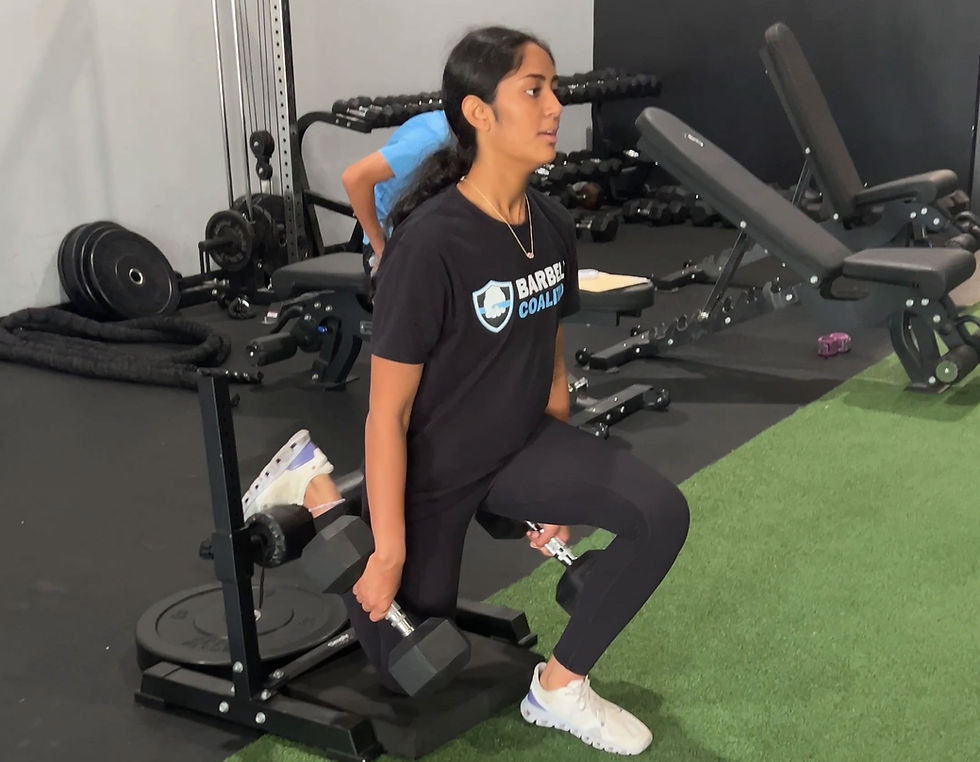
Squats, split squats, hinges, calf work, and controlled landing variations can all support the positions used on the field. The exact exercise matters less than appropriate coaching, progression, and execution.
This is why speed work and strength work should connect. Treating them as unrelated pieces leaves a gap in the athlete’s preparation.
Common Deceleration Mistakes
The most common mistake is adding speed before the athlete can control the stop. More intensity makes an existing movement problem louder; it does not automatically solve it.
Other mistakes include using endless cone drills with no coaching point, turning every change-of-direction drill into conditioning, and judging the athlete only by the stopwatch.
A slower repetition with a clean stop may be more useful than a faster repetition that requires extra steps, poor posture, or a loss of balance.
How Parents Can Spot Real Progress
Parents do not need to coach from the sideline. Look for simple changes over several weeks:
Fewer steps needed to stop after a sprint
Better balance when landing or planting
A lower, more controlled body position before a cut
Less slipping, drifting, or standing upright during direction changes
More confidence entering and exiting competitive drills
These are examples of the measurable changes discussed in How to Know If Your Athlete’s Training Is Actually Working. Progress should appear in movement quality and performance, not just sweat.
Fit Deceleration Work Around the Sport Schedule
During a busy school-sport week, athletes already accumulate sprints, cuts, jumps, and stops at practice. Extra work should be dosed carefully.
A smart in-season strength plan can maintain the athlete’s physical qualities without piling on unnecessary fatigue.
Families preparing for a new season can also use the planning ideas in Preparing Youth Athletes for Fall Sports to build speed and strength gradually instead of cramming them into the final week.
When Pain Is More Than a Training Problem
Normal effort and mild muscle fatigue can happen during training. Sharp pain, swelling, limping, repeated joint pain, or symptoms that worsen should not be coached through.
Stop the activity and involve an appropriate healthcare professional when pain or injury concerns persist. A performance coach can adjust training, but should not diagnose an injury.
Build More Complete Athleticism With the 30-Day Athlete Accelerator
Barbell Coalition’s 30-Day Athlete Accelerator gives middle school and high school athletes a coached introduction to strength, speed, power, conditioning, and controlled change of direction.
Training is adjusted to the athlete’s experience and sport schedule so Cedar Park, Leander, and nearby families can see how a structured program fits into real life.
If your athlete does not improve during the 30 days, they receive two additional weeks of training free.


Comments