
What Is Relative Strength, and Why Does It Matter for Youth Athletes? - Cedar Park Athlete Training

Parents often hear that an athlete needs to get stronger, but the number on the weight alone does not tell the whole story. Relative strength describes how much force an athlete can produce compared with their own body weight.
That distinction matters for sprinting, jumping, changing direction, climbing, and controlling the body in competition.
For our Cedar Park & Leander athletes, our athlete training programs aim to build absolute strength while also teaching athletes to move their own body efficiently.
Relative Strength Compares Strength to Body Weight
Absolute strength is the total amount an athlete can lift or produce. Relative strength places that ability in context by comparing it with the athlete’s size.
For example, two athletes may use the same weight on an exercise, but the lighter athlete is moving more load relative to body weight. That does not automatically make one athlete better. It simply gives the coach another useful way to understand performance.
Why Absolute Strength Alone Can Be Misleading
Young athletes are growing at different rates. Height, body mass, coordination, and training experience can change quickly, especially through middle school and high school.
A larger athlete may naturally lift more total weight, while a smaller athlete may show excellent control in pull-ups, push-ups, jumps, and single-leg movements. Coaches should look at both qualities instead of treating one number as the complete score.
This is also why choosing an appropriate training load matters more than comparing one athlete with another.
Where Relative Strength Shows Up in Sports
Athletes repeatedly move their own body through space. A soccer player accelerates and decelerates. A basketball player jumps and lands. A wrestler controls position against resistance. A baseball or softball athlete must transfer force without losing balance.
In each case, added strength is most valuable when the athlete can use it without becoming slower, less coordinated, or more fatigued.
Pull-Ups Are One Useful Example
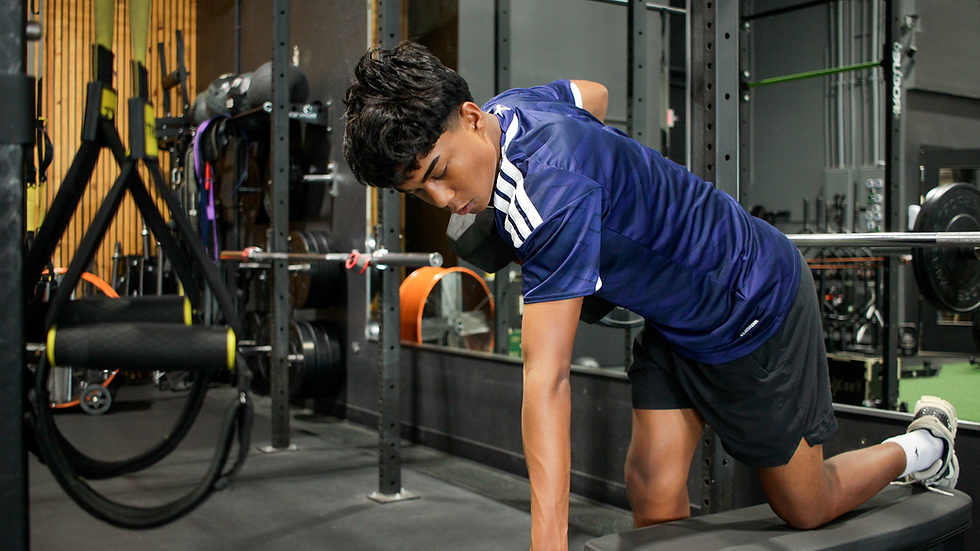
Pull-ups and chin-ups are simple examples of relative upper-body strength because the athlete must move their own body. An athlete who cannot yet complete a full repetition can still train the pattern with assistance, controlled lowering, holds, and rows.
Research on pull-up performance shows that body mass and pulling strength both influence the result. That is why coaches should evaluate the whole athlete instead of judging the test in isolation.
Parents can read more about why pulling strength belongs in a balanced youth program.
Body Weight Is Not the Enemy
Relative strength should never be used to pressure a growing athlete to lose weight. Youth athletes need enough nutrition to support growth, training, recovery, and sport.
The coaching goal is to help the athlete become stronger and more skillful at their current size. As the athlete grows, performance may temporarily change while coordination catches up. Good programming adjusts instead of turning normal growth into a problem.
How Coaches Build Relative Strength
Coaches can improve relative strength through progressive resistance training, body-weight exercises, single-leg work, trunk control, and consistent technique.
The progression does not need to be dramatic. One cleaner pull-up, a more stable split squat, a stronger push-up position, or the same load moved with better control can all represent real improvement.
Athletes also do not need to take every set to complete exhaustion. Leaving a small amount of quality work available often produces better repetitions and more consistent progress. Learn more about whether youth athletes should train to failure.
What Progress Should Look Like
Parents should look for trends rather than one-day records. Useful signs include more controlled repetitions, improved range of motion, better landing positions, faster movement with the same load, and stronger performance without excessive soreness.
Testing should help guide the plan, not label the athlete. A baseline gives the coach a starting point, and repeat testing shows whether the program is building usable strength.
Cedar Park and Leander Parents: Start With a Clear Training Baseline for Your Athlete
Relative strength gives Cedar Park, Leander, and nearby families a more complete way to understand athletic development. The goal is not simply to make the weight-room numbers bigger. It is to help the athlete move, compete, and recover better.
The 30-Day Athlete Accelerator starts with an assessment and builds a coached plan around the athlete’s current strength, speed, power, and movement needs.
If your athlete does not improve during the 30 days, they train for free.


Comments