
How Much Sleep Do Youth Athletes Need During the School Year? - Cedar Park Athlete Training

When school starts again, sleep is often the first part of an athlete’s routine to shrink. Early alarms, homework, practices, games, and screen time can quietly turn a full night of rest into six or seven hours.
That matters because sleep is not separate from training. It is when the athlete recovers from the work, adapts to it, and gets ready to perform again.
A good Cedar Park athlete training plan cannot outwork chronic sleep loss. If recovery falls behind, adding more drills or harder workouts usually creates more fatigue instead of better results.
How Much Sleep Do Youth Athletes Actually Need?
According to the CDC’s current sleep guidance, children ages 6–12 should regularly get 9–12 hours per day, while teenagers ages 13–18 should get 8–10 hours.
Those ranges are useful starting points, not a reason to chase a perfect number every night. The practical goal is to give the athlete enough sleep that energy, mood, school focus, and physical performance stay consistent.
Many Cedar Park and Leander athletes need to wake up early for school. That means the bedtime—not the morning alarm—is usually the part of the schedule families can control.
Why Sleep Changes What Happens in Training
A tired athlete may look unmotivated when the real problem is recovery. Warm-ups feel harder, reaction time can look slower, and technique may break down at loads that normally feel comfortable.
Sleep loss can also make normal soreness feel worse. When that happens several days in a row, the athlete may struggle to get quality work from practices and strength sessions.
Parents do not need to analyze every workout. Watch for a pattern: if the athlete’s energy, coordination, mood, and performance all drop together, sleep should be one of the first things checked.
Build Bedtime Backward From the Morning Alarm
Start with the time the athlete must wake up, then count backward far enough to create a realistic sleep window. A teenager waking at 6:15 a.m. may need to be asleep around 9:45 p.m. to get eight and a half hours.
Being in bed is not the same as being asleep. Leave a little room for showering, packing a school bag, winding down, and actually falling asleep.
This is easier when the routine is planned before a busy week starts. Waiting until the athlete is already exhausted usually leads to another late night.
Protect the Final Hour Before Bed
The last hour does not need to be perfect or completely screen-free, but it should help the athlete slow down. Bright screens, intense gaming, late homework, and heavy meals can all make the transition harder for some athletes.
Finish the most demanding homework earlier when possible
Pack practice gear and school items before the bedtime routine
Keep the room cool, dark, and quiet
Use a consistent lights-out time on most school nights
Move caffeine and energy drinks away from the afternoon and evening
Consistency matters more than creating an elaborate routine. A simple pattern that the athlete can repeat is usually more effective than a complicated plan that lasts three nights.
Training Should Adjust When Sleep Drops
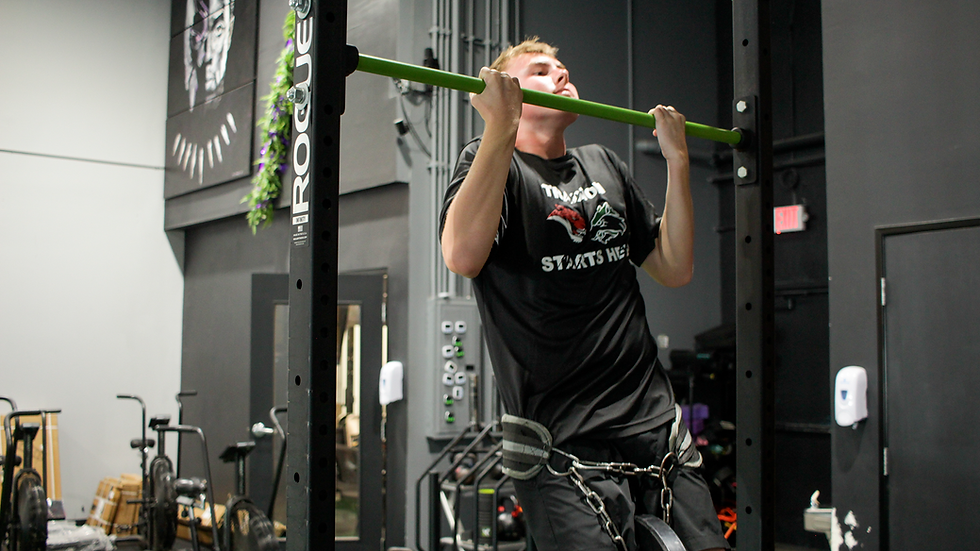
One short night does not automatically mean an athlete should skip training. The coach can often preserve the important work while reducing unnecessary volume, conditioning, or high-fatigue exercises.
Several poor nights in a row are different. That is when the athlete may need a lighter session, fewer total sets, or more recovery between hard days.
This is the same principle used in a smart in-season strength-training plan: the program should respond to the athlete’s total workload, not pretend the gym is the only stress in the week.
Do Not Try to Catch Up With Weekend Marathons
Sleeping later on the weekend can help an athlete recover from a demanding week, but it does not fully replace a consistent school-night routine.
Very large swings between weekday and weekend sleep can also make Sunday night harder. A more stable schedule gives the athlete a better chance of feeling ready on Monday.
If a late tournament or travel day disrupts sleep, treat the next day as a recovery decision rather than trying to punish the athlete for being tired.
A Practical School-Night Routine
Eat dinner or a recovery meal soon after practice
Complete homework and pack the next day’s gear
Begin winding down 30–60 minutes before bed
Keep the wake time and bedtime reasonably consistent
Tell the coach when several poor nights are affecting training
Families do not need to control every minute. The goal is to remove avoidable delays and make the better routine easier to repeat.
For more help organizing the whole week, read Preparing Youth Athletes for Fall Sports and How Often Should Youth Athletes Strength Train?.
When Parents Should Look Deeper
Persistent trouble falling asleep, loud snoring, frequent waking, or ongoing daytime exhaustion deserves more attention than a training adjustment. Parents should discuss continuing sleep concerns with the athlete’s healthcare provider.
The coach’s role is to notice performance and recovery trends—not diagnose a sleep problem.
Cedar Park Parents: Start With the 30-Day Athlete Accelerator and Get Your Athlete Training
Barbell Coalition’s 30-Day Athlete Accelerator gives middle school and high school athletes a coached introduction to strength, speed, power, and conditioning with measurable goals.
Training is adjusted to the athlete’s experience, schedule, and recovery so Cedar Park, Leander, and nearby families can see how a structured program fits into the school week.
If your athlete does not improve during the 30 days, they receive two additional weeks of training free.


Comments